
Jackson County Court Records After Arrest
Jackson County court records after an arrest begin with a local custody event and then move through the North Carolina court process. A person arrested in Jackson County is usually booked through the Jackson County Detention Center, while filed criminal charges are tracked through the clerk and court system. Jackson County is assigned to Prosecutorial District 43, Superior Court District 43B, and District Court District 43. Those district labels matter because misdemeanor, felony, juvenile, probation, and docket work can involve different offices even when the arrest began with one local jail booking.
The local court address is the Jackson County Courthouse, 401 Grindstaff Cove Road, Sylva, NC 28779. The courthouse and Clerk of Superior Court use 828-631-6400. Normal public hours are Monday through Friday, 8:30 AM to 5:00 PM, and the Judicial Branch lists wheelchair access for the courthouse. The District Attorney contact in Jackson County is 828-631-6410, magistrates are reached at 828-631-6419, and probation is reached at 828-586-7514. These numbers are not interchangeable. The jail can confirm custody, the clerk can route court records, and the DA makes charging and prosecution decisions for the State.
The Judicial Branch courthouse page for Jackson County is the source for the local court address, phone, hours, service links, and accessibility notes.
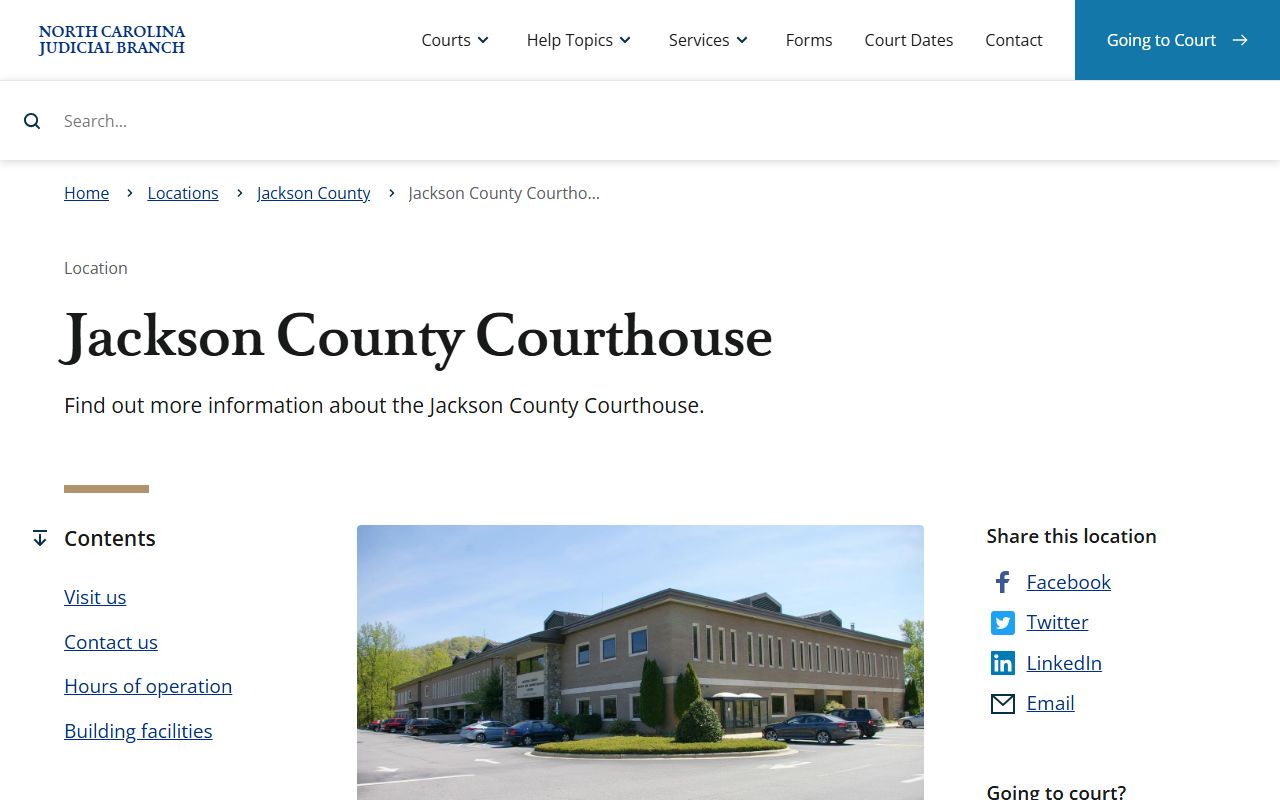
That courthouse record is useful because it separates court access from jail access, even though the courthouse and detention center are on adjacent Grindstaff Cove Road addresses.
For custody and booking status, use Jackson County jail inmate records. For booking photos and mugshot access limits, use Jackson County jail mugshots. Court records after a jail arrest are the filed case side: charges, hearings, bond entries, dispositions, judgments, and public clerk records. The arrest record may contain the officer's initial charge language, but the court record is the place to track what the prosecutor filed and how each count ended.
Jackson County Court Records Search
The main online path is the North Carolina eCourts Portal. The official Judicial Branch training materials describe Smart Search, Search Hearings, registration, case number formatting, and filters that help narrow results to the right county and case. Anonymous users do not need registration for public case information. Registration may help users save cases, but elevated access is reserved for users with verified legal authority or business need. If a case is confidential, sealed, expunged, juvenile, or otherwise restricted, it may not appear to the public even when an arrest occurred.
The safest search pattern is to start broad and then filter. Use the defendant's full name and, if available, a birth date or approximate filing range. Set the location filter to Jackson County when the Portal offers that option. Search Hearings can help when the case number is known or when the next court date is the most urgent fact. If the online record is unclear, older, missing, or sealed from public Portal access, the clerk's office remains the official place to ask about public criminal case records and public self-service terminals.
The North Carolina Judicial Branch Portal training page shows the Smart Search and Search Hearings features used for public court records after arrest.
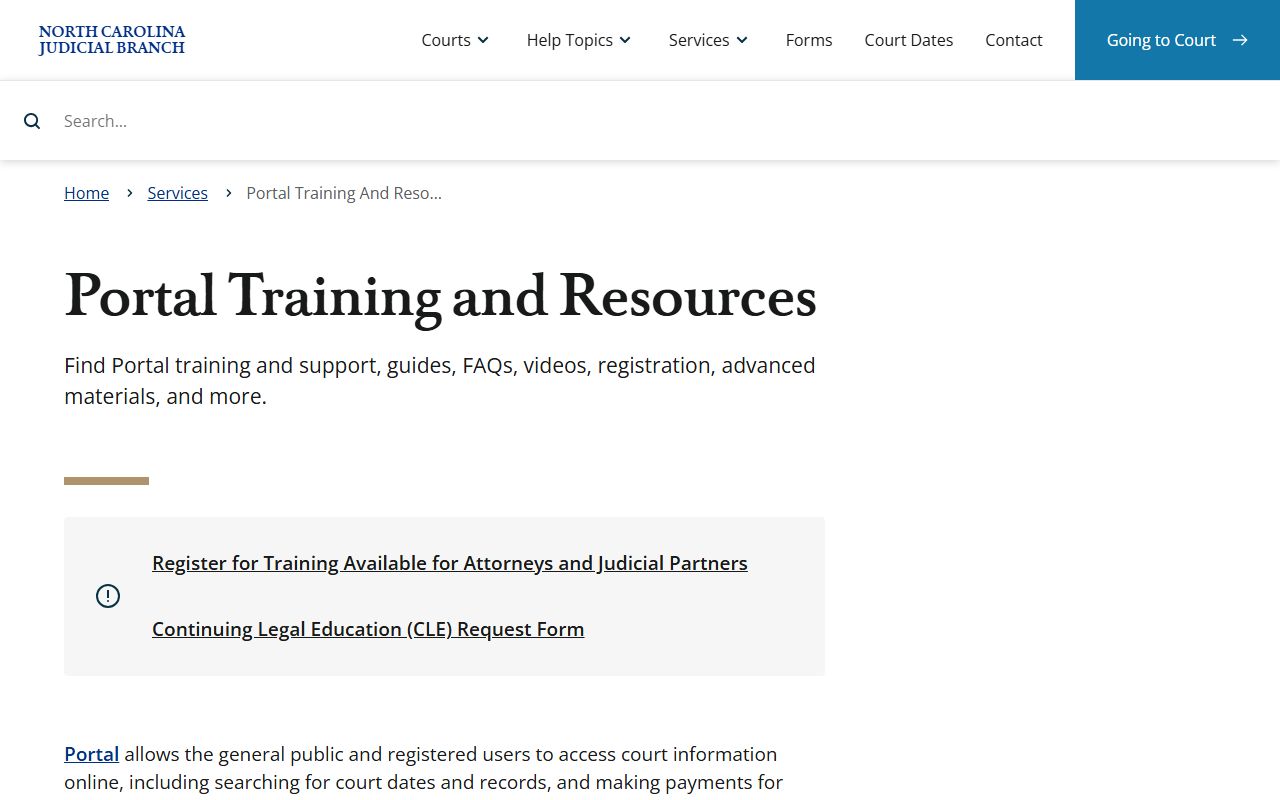
The Portal image supports the search workflow because court records after an arrest are usually found by name, case number, case type, location, and hearing filters.
| Field or Feature | Type | Required | How It Helps |
|---|---|---|---|
| Smart Search | Search module | Search term required | Shows public case summary, party information, events, dispositions, hearings, and financial information when public. |
| Location Filter | Filter | Optional | Limits results to Jackson County when available, reducing false matches from other counties. |
| Party Name | Text | Optional | Searches by defendant or party name; training materials describe wildcard options for partial names. |
| Date of Birth | Date filter | Optional | Helps separate common names, though public access to birth date details may vary. |
| Case Type | Filter | Optional | Use criminal actions for filed criminal charges after a Jackson County arrest. |
| Case Status | Filter | Optional | Filters open, closed, or other status values when the Portal makes them available. |
| Case Filing Date Range | Date range | Optional | Narrows results by the likely time after booking or first court filing. |
| Case Number | Text | Optional | Enterprise Justice case numbers use year, case type letters, sequence number, and county identifier. |
| Search Hearings | Hearing search | Optional | Search by case number, party, business, attorney, judicial officer, or courtroom for court calendar data. |
Portal records can include the case summary, Register of Actions, case information, assignment information, party information, case events, dispositions, hearings, and financial information when those items are public. Court records after a jail arrest may also need in-person review. The Judicial Branch says criminal cases can be searched at public terminals in a clerk's office by defendant name, case number, or victim and witness name, and that paper files are accessed at the clerk's office in the county where the case is located.
Jackson County Arrest to Court Path
The arrest to court path has several distinct records. First, the person is brought to the Jackson County Detention Center for booking. That jail intake may list an arrest charge, warrant charge, agency shorthand, or intake count. Next, a magistrate or court officer may set release conditions, including a written promise, unsecured bond, secured bond, cash bond, or a hold. After that, the District Attorney reviews the matter and decides how to prosecute. Filed charges and hearings then appear in the clerk and court system when they are public.
A simple flow is: arrest, booking, magistrate or release condition, prosecutor review, filed court case, hearings, disposition. The booking record and court record do not always match word for word. A felony can start in District Court and later move to Superior Court. The DA may dismiss some counts, proceed on others, reduce a charge, amend wording, or obtain an indictment. A released defendant may still have a pending court case. A sentenced person may later move to North Carolina Department of Adult Correction custody, while the court record remains with the court.
| Charging Document | Who Uses It | Common Role | What to Check |
|---|---|---|---|
| Complaint | Officer or prosecutor | Often starts a lower-level criminal case or supports the first filed charge. | Compare it with the later court charge list because wording may change. |
| Information | Prosecutor | Formal prosecutor-filed charge document used in some criminal matters. | Look for the exact count, statute, level, and filing date. |
| Indictment | Grand jury | Common in more serious felony matters and Superior Court proceedings. | Check whether the indictment replaces or adds to earlier District Court entries. |
The charging document is the bridge from arrest facts to court records. It is also the reason a jail booking entry should not be treated as the final court charge. Court records after a Jackson County arrest should be read by count, date, court level, and disposition rather than by the booking label alone.
Jackson County DA Records Role
Jackson County is served by District Attorney Ashley Hornsby Welch in Prosecutorial District 43, which includes Cherokee, Clay, Graham, Haywood, Jackson, Macon, and Swain counties. The Conference of District Attorneys page lists the main DA office at the Macon County Courthouse, 5 West Main Street, Franklin, NC 28734, phone 828-349-7210, and fax 828-349-7211. The Jackson County court contact directory gives a local District Attorney phone of 828-631-6410.
The DA represents the State in criminal cases, prepares the criminal trial docket, advises law enforcement, and handles criminal and some juvenile matters. That role is central to court records after arrest because the DA's filing choices can change what appeared at booking. If an officer's arrest charge was broad or based on a warrant, the prosecutor-filed charge may be more precise. If the evidence does not support the original count, it may be reduced, amended, or dismissed. District Court usually handles misdemeanors, infractions, and juvenile matters, while Superior Court usually handles more serious felonies.
The District Attorney District 43 page identifies Ashley Hornsby Welch, the district counties, and the office's prosecution duties.
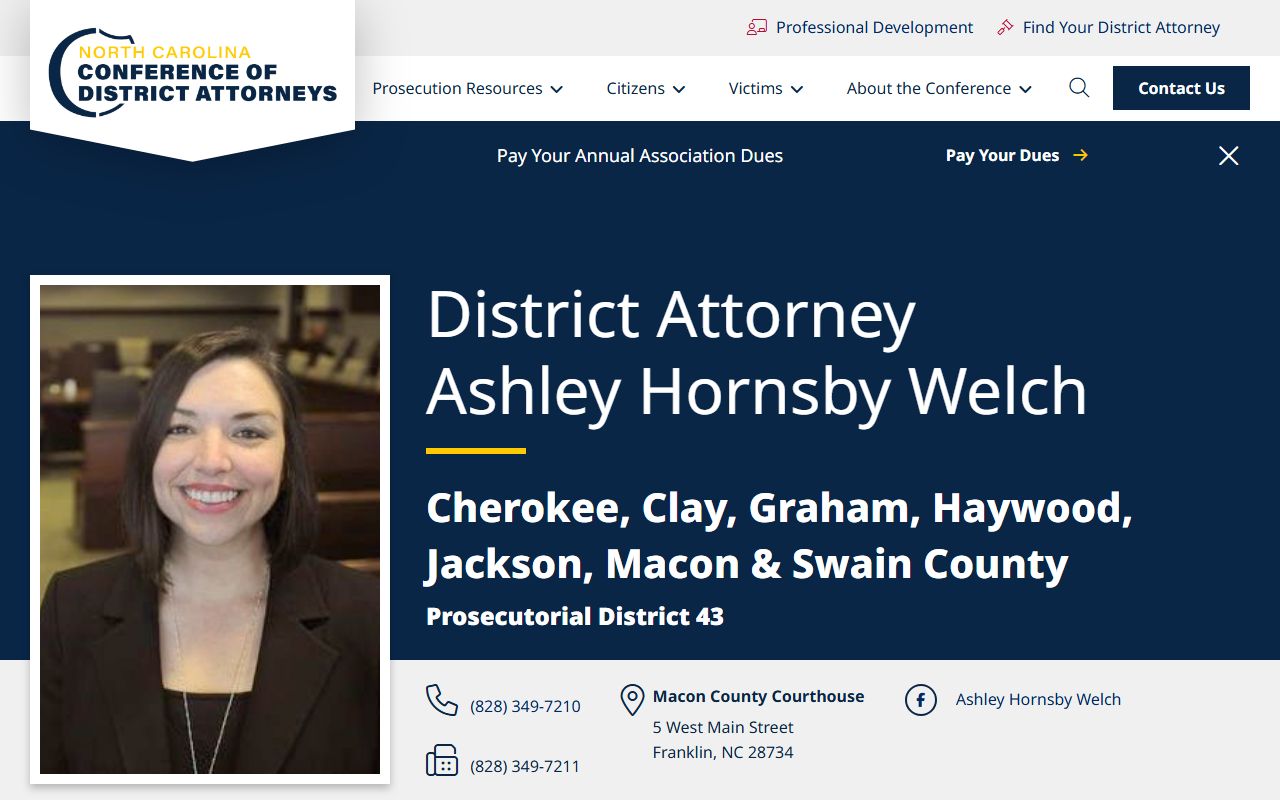
This DA source is useful for interpreting the difference between arrest information, prosecutor action, and the final court record.
Jackson County Arrest Charge Status
Charge status terms explain where each count stands. A charge can be pending even after the person is no longer in jail. It can be amended if the wording or count changes. It can be reduced if the case resolves on a lesser offense. It can be dismissed without a conviction, or it can end in a not guilty finding, acquittal, guilty plea, judgment, prayer for judgment continued, or other disposition. A conviction is not the same as an arrest, and a filed charge is not the same as proof of guilt.
| Status | Plain Meaning | Record Reading Tip |
|---|---|---|
| Pending | The case or charge remains open. | Check the next hearing and bond conditions, not just the booking date. |
| Amended | The charge changed from its original form. | Compare the first arrest charge with the latest filed count. |
| Reduced | The case moved to a lesser charge or lower level. | Look for plea terms, amended counts, or final judgment entries. |
| Dismissed | The charge ended without conviction on that count. | Confirm whether other counts in the same case remained pending or resolved differently. |
| Not Guilty or Acquitted | The State did not prove the charge to the required level at trial. | Do not treat the arrest or charge as a conviction. |
| Guilty or Plea | The defendant admitted guilt or was found guilty. | Read the judgment, sentence, and any probation or custody terms. |
| PJC | Prayer for judgment continued, a North Carolina disposition where judgment may be continued. | Ask the clerk or an attorney how that entry affects the specific record. |
| Conviction | A formal adjudication of guilt. | Use the conviction entry, not the arrest entry, for final outcome language. |
Charge status is one of the easiest places to misread court records after a jail arrest. A roster charge may tell why the person was brought to jail. A court status tells what happened to a filed count. For accurate results, read every count in the case and check whether one case number has multiple charges with different outcomes.
Jackson County Court Bond Records
Bond information after a Jackson County arrest may involve the detention center, magistrate, clerk, or eCourts case record. The official detention page did not publish a local bond payment instruction page in the research. For bond questions, use the Detention Center at 828-586-2458, magistrates at 828-631-6419, and the Clerk of Superior Court at 828-631-6400. The key questions are whether bond has been set, who set it, what type it is, whether any hold blocks release, and where bond may be posted.
| Release Type | How It Works | Jackson County Caution |
|---|---|---|
| Written Promise | Release based on a written promise to appear. | The person still has court dates and must comply with the order. |
| Unsecured Bond | No upfront deposit, but liability may attach if conditions are broken. | Confirm the exact conditions before release. |
| Secured or Cash Bond | Money, property, or surety is posted to secure release. | Do not assume a jail commissary kiosk can accept bond. |
| Surety Bond | A licensed bail bondsperson posts bond under a private contract. | No official Jackson County preferred bondsman list was located. |
| No-Bond Hold | A court order, detainer, probation issue, or another warrant prevents release. | Posting bond on one charge may not release the person if another hold exists. |
Inmate account deposits are separate from bond. Jackson County's detention materials describe commissary deposits through a lobby kiosk at the Magistrate's Office lobby and online through Inmate Canteen, including a service fee for kiosk deposits. Those funds are for the inmate account, not release. If a bond is posted but the person is not released, common reasons include another hold, a new charge, processing time, probation or parole action, a federal detainer, an ICE detainer, or a release-condition issue.
Jackson County Warrant Records After Arrest
No official Jackson County Sheriff's Office active warrant search page, warrant list, warrant-search form, or most-wanted database was located in the research. That gap is important. A warrant search is not the same as an inmate search. An inmate search asks whether the person is currently held. A warrant search asks whether a legal process exists that could lead to arrest. If the person has already been arrested, the detention center can address custody status, while the clerk and eCourts can help with related criminal cases and court-issued process.
Use official channels when a warrant may be involved: the detention center at 828-586-2458 for current custody, Sheriff's Office administration at 828-586-4355 for agency routing, magistrates at 828-631-6419 for magistrate-related questions, and the clerk at 828-631-6400 for case or court process questions. The eCourts Portal may show related criminal cases, missed court dates, orders for arrest, hearing history, or bond forfeiture records, but not every warrant detail will be public online.
- Arrest warrant
- Judicial authority to arrest a person on a criminal charge.
- Bench warrant or order for arrest
- A court-issued process often tied to failure to appear or violation of a court order.
- Fugitive hold
- Custody based on another county, state, or jurisdiction's warrant.
- Probation or parole hold
- A supervision hold that may prevent release even when a local bond exists.
- Federal or ICE detainer
- A federal criminal or immigration custody request that can affect release from local jail.
Note: A person who thinks a warrant exists should use legal counsel, the clerk, or law enforcement channels rather than relying on rumor or third-party lists.
Jackson County Charges vs Convictions
Charges and convictions must stay separate when reading Jackson County court records after arrest. A charge is an accusation filed in court. A conviction is the result of a guilty plea, guilty finding, or other formal adjudication of guilt. A person can be arrested, booked, charged, released, and later have the case dismissed. Another person can have several charges, with one dismissed and another ending in conviction. The final disposition is the record point that tells what happened to each count.
| Question | Charge | Conviction |
|---|---|---|
| Record stage | Accusation after arrest or prosecutor filing. | Final adjudication of guilt by plea, verdict, or judgment. |
| Proof level | Based on probable cause or filing decision. | Requires proof beyond a reasonable doubt or a valid guilty plea. |
| Public meaning | Shows what was alleged. | Shows the count on which guilt was formally found. |
| How to verify | Read the charging document and case events. | Read the disposition, judgment, and sentence entries. |
Record tip: Treat each count separately because one Jackson County case may include pending, dismissed, reduced, and convicted counts.
Jackson County Sealed vs Expunged
Public access to court records after an arrest is broad in many routine criminal cases, but it is not unlimited. North Carolina's Public Records Act, including G.S. 132-1 and G.S. 132-1.4, favors access to many public records while limiting criminal investigation records and other protected material. Expunction rules are in Chapter 15A Article 5, and the North Carolina Judicial Branch has an expunction help topic. Eligibility depends on the exact statute, charge, outcome, prior history, and court order.
| Question | Sealed Record | Expunged Record |
|---|---|---|
| Public visibility | Hidden from normal public access by law or court order. | Removed or treated as cleared under a qualifying expunction order. |
| Effect | Public users may not see the record, but limited official access may remain. | Legal effect depends on the specific North Carolina expunction statute and order. |
| Common context | Juvenile, confidential, protected, or court-restricted matters. | Some dismissed, not guilty, or qualifying conviction records may be eligible. |
| Where to ask | Clerk of Superior Court or a lawyer. | Clerk of Superior Court, Judicial Branch expunction forms, or a lawyer. |
A dismissal does not automatically mean every public trace vanishes. A not guilty result does not by itself answer whether a record is expunged. The court order matters. Juvenile records, sealed charges, expunged matters, medical information, some criminal investigation records, and records restricted by statute may be withheld from ordinary public searches.
Jackson County Court Records Access Limits
The North Carolina Judicial Branch court-records help page explains that criminal case information can be searched at public self-service terminals in a clerk's office and that paper files are accessed in the county where the case is located. Copies may be made for a fee. The Judicial Branch public-records route is for existing Judicial Branch records not obtained through ordinary court-record access, while county or city records must be requested from the county or city office that holds them.
That split matters in Jackson County. Court records after an arrest are not the same as police reports, jail logs, booking records, or mugshots. Police reports are requested from the law enforcement agency involved, though complete reports may not be public unless criminal discovery rules require release. Jail records and booking materials route through the Sheriff's Office or Jackson County public records process. Prisoner records for people in the North Carolina prison system route through the North Carolina Department of Adult Correction offender search, not the Jackson County clerk.
The official court contact directory lists the clerk, DA, magistrates, probation, jury, and other court contacts for Jackson County. It is useful for routing questions to the right office before a person asks the jail for a court record or asks the clerk for a booking record.
Jackson County Arrest Background Checks
Casual court lookup and a formal background check are different tasks. The Portal is useful for public case and hearing checks. The clerk's office is the better route when an official court-record search or copy is needed. A private background check used for employment, housing, credit, insurance, or similar screening has separate federal and state compliance duties. A public court page should not be used as a shortcut for a regulated consumer report.
Important: This resource is not a consumer reporting agency and may not be used for FCRA-covered screening decisions.